
Dear friends,
Thank you for visiting my legislative website. I am honored to serve members of the 20th district and I look forward to the opportunity to serve you during the 104th General Assembly.
Your opinions are always appreciated, and I urge you to contact my Chicago office (773-278-2020) or Springfield office (217-782-8191) if you have any questions or concerns.
To learn more about current legislative issues, please visit the General Assembly website at www.ilga.gov or the Senate Democratic Caucus website at www.illinoissenatedemocrats.com.

Senator Graciela Guzmán
She/Her/Ella
20th District
Welcome to Senator Graciela Guzmán's legislative website
Guzman shares opportunity to apply for energy bill assistance
- Details
- Category: Press Releases
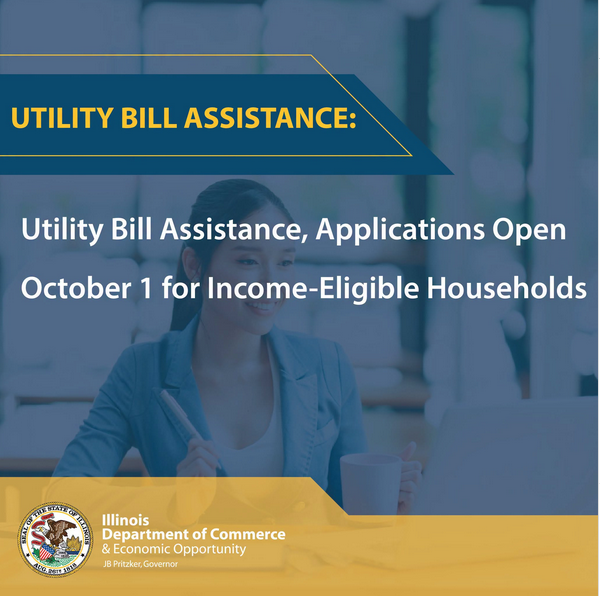
CHICAGO – With energy prices on the rise, State Senator Graciela Guzmán encourages eligible families in the 20th District to apply for the Low-income Home Energy Assistance Program.
“In the midst of an affordability crisis, our state is doing what it can to help lower the rising burden that energy prices have become,” said Guzmán (D-Chicago). “With the colder weather around the corner, warmth and comfort shouldn’t come at a high price. I encourage those who can to apply for assistance.”
The LIHEAP program – which opens Oct. 1 – utilizes a priority application system to ensure that families most in need can apply first. All families who meet the qualifications and provide proper documentation will receive support until funding is exhausted. Families who earn up to two times the federal poverty level are eligible to receive support through LIHEAP. A chart with the eligible income thresholds can be found here.
In addition to LIHEAP, Illinois offers a number of other programs to support eligible low-income families with utility assistance. These programs include:
- One-Time Direct Vendor Payment: All LIHEAP recipients receive a one-time payment.
- Crisis/Reconnection Assistance: Funding is available for families in heating-related emergency situations.
- Furnace Assistance: Based on funding availability, Furnace Assistance may be provided to homeowners who do not have an operating furnace for their residence.
- Home Weatherization Program: The Illinois Home Weatherization Assistance Program (IHWAP) helps low-income residents and households conserve fuel and reduce energy costs by making their homes and apartments more energy efficient.
People can learn more and apply for these programs on the DCEO Website.
Guzmán law improves health, safety and dignity on construction jobsites
- Details
- Category: Press Releases
SPRINGFIELD – State Senator Graciela Guzmán’s legislation, developed in partnership with Chicago Women in Trades, to improve sanitation, workplace accommodations and access to menstrual products on construction jobsites has been signed into law.
“Every worker deserves to be treated with dignity and have access to safe, sanitary working conditions,” said Guzmán (D-Chicago). “For too long, construction workers who menstruate, are pregnant or are lactating have been expected to work without the most basic accommodations. These are not special privileges. They are common-sense workplace standards that help more women and transgender folks to enter, stay in and thrive in the trades.”
Senate Bill 3465 strengthens health, safety and workplace dignity for construction workers across Illinois by establishing basic sanitation standards, expanding accommodations for workers who menstruate or are lactating, and helping ensure that more people can build long-term careers in the skilled trades.
The law requires that when a worker who menstruates is present on a construction site with 10 or more workers, employers must provide a separate restroom designated for workers who menstruate.
Read more: Guzmán law improves health, safety and dignity on construction jobsites
Guzmán effort to expand mammogram access to all ages now law
- Details
- Category: Press Releases
SPRINGFIELD – State Senator Graciela Guzmán’s push to allow mammograms under all health insurance policies regardless of the person’s age has been signed into law by the governor.
“A cancer diagnosis is frightening enough without having to fight your insurance company first,” said Guzmán (D-Chicago). “When early detection can mean the difference between a treatable diagnosis and a life-threatening one, coverage should follow medical evidence, not arbitrary age limits. This law ensures that patients can get the care their providers know they need.”
Guzmán’s law will expand mammogram coverage to align with evidence-based clinical guidelines and the recommendations of a health care provider, including when medically appropriate for individuals under 35. Under the law, mammograms will be covered for patients of any age when deemed necessary by a healthcare provider.
According to the Illinois Department of Public Health, except for skin cancers, breast cancer is one of the most common cancers affecting women, and early detection dramatically improves treatment options and survival. By ensuring medically necessary mammograms are covered regardless of age, Illinois is helping patients access care when it matters most.
In 2012, what should have been one of the happiest seasons of Maureen Anderson’s life became one of its hardest. Instead of planning her future, she was navigating surgeries, chemotherapy, radiation and ultimately a hysterectomy after being diagnosed with breast cancer. The diagnosis changed not only her health, but the future she had imagined for herself and her family.
“No one should have to spend precious time fighting an insurance company when they should be focused on their health,” said Guzmán. “This law removes one more barrier to early detection and gives more Illinoisans the opportunity to catch breast cancer before it’s too late.”
House Bill 5001 was signed into law on Friday.
Illinois has resources for those seeking mammograms and other exams through the Illinois Breast & Cervical Cancer Program. This program offers free mammograms, breast exams, pelvic exams and Pap tests to those eligible.
###
New Guzmán law takes on private equity’s growing influence in health care
- Details
- Category: Press Releases
SPRINGFIELD – Senator Graciela Guzmán’s bill to monitor private equity in our health care system has been signed into law.
“Health care exists to care for people, not maximize returns for investors,” said Guzmán (D-Chicago). “Where private equity firms see profit, we see patients, workers, and entire communities. When hospitals are treated like financial assets instead of public institutions, families pay the price through closed facilities, fewer services, and diminished access to care. This law brings greater transparency and accountability to decisions that can reshape the health and well-being of communities across Illinois.”
The law requires private equity-backed health care mergers and acquisitions to be reported to the Illinois Attorney General before they move forward, giving the state greater visibility into transactions that can affect patient access, competition, costs, and the long-term stability of hospitals and other health care providers. This legislation establishes greater transparency around private equity transactions in health care, laying the foundation for stronger oversight as Illinois continues examining the impact of corporate consolidation on patients, workers and communities.
Read more: New Guzmán law takes on private equity’s growing influence in health care
More Articles …
Page 1 of 31


Follow Senator Guzmán


